
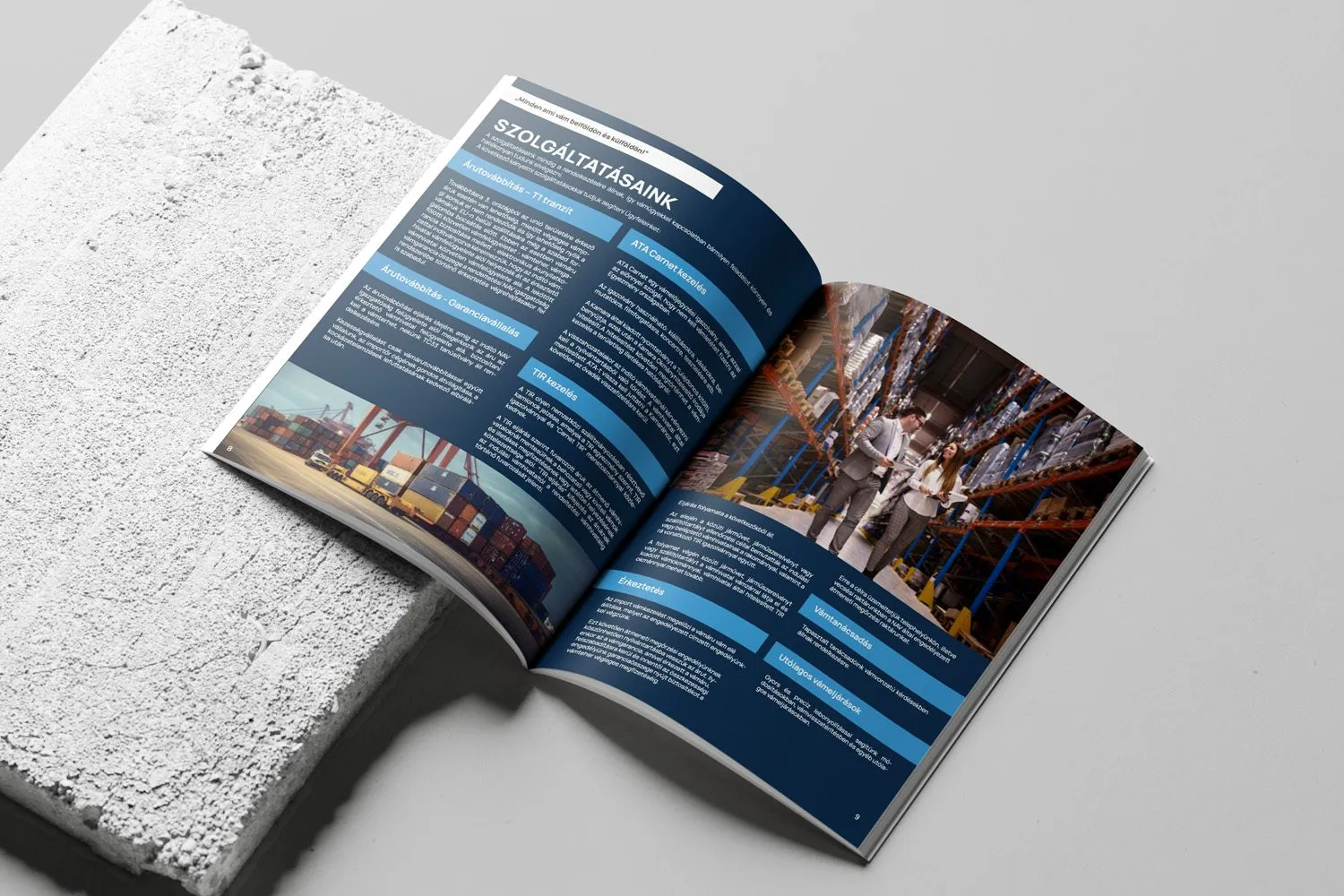
Learn the print publication design process step by step! I show you how a professional, print-ready publication is made, from design to printing.
Graphic design
Print publication design step by step: how is a professional printed piece made?
Publication design is one of the most complex graphic design tasks. It is not enough for a piece to look good: it also has to be functional, clear and technically flawless for print. A badly prepared print file doesn’t just cause aesthetic problems; it can also lead to serious extra costs and unnecessary reprints.
In this article I’ll show you in detail how professional publication design works step by step, what to watch out for during the design, and what sets a truly high-quality printed piece apart from an average one.
What is publication design? Publication design is a graphic design process that focuses specifically on materials meant for print. These include, among others:
flyers
posters
brochures
catalogues
magazines
books
menus
company presentation materials
The goal is not merely a striking look, but information that is logically structured, easy to read and visually appealing. A well-designed publication guides the reader’s eye, emphasises the important messages and supports the business goals.
Step 1: defining the goal and the target group Professional publication design always starts with strategic thinking. Before a single design element is made, the basic questions need answering:
What is the publication’s goal? (sales, information, brand building)
Who belongs to the target group?
Where, and in what setting, will they come across the publication?
Knowing the target group defines the whole visual direction: the style, the colour scheme, the typography and even the amount of text.
A brochure made for a premium audience is cleaner, more restrained and more elegant, while a flyer for a sale works with stronger colours and bolder messages.
Step 2: planning the content and the structure A good publication is not crowded but carefully structured. Organising the content always comes before the design:
putting together the final text,
choosing the images and illustrations,
defining the main and secondary messages.
This is when the designer creates the visual hierarchy, the order in which the reader moves through the page. It is decided what the primary focal point is, which elements get emphasis, and how the content becomes easy to take in.
Step 3: format, size and technical basics One of the most critical points of print design is making the technical decisions. They affect not only the design but the production costs as well.
Important questions at this stage:
the exact size (A4, A5, DL or a custom format),
portrait or landscape layout,
number of pages,
paper type and weight,
binding or folding method.
A badly chosen format or paper can ruin even the best design.
Step 4: graphic design and brand identity This is the phase where the publication really comes to life. During the design:
the final colour palette takes shape,
the fonts are chosen,
the grid and layout of the pages are created,
the images, icons and graphic elements appear.
A professional printed piece always:
fits the brand identity,
works with a consistent visual system,
is easy to read at every size,
has a timeless look.
Step 5: checking and fine-tuning One of the most underestimated yet crucial parts of publication design is checking. This is the stage where small but critical errors come to light.
This is when:
the text is carefully proofread (typos, line breaks),
the resolution and quality of the images are checked,
margins and line spacing are refined,
the colours are finalised.
This step separates an “acceptable” publication from a truly professional printed piece.
Step 6: prepress (DTP) During prepress, also known as DTP, the design is turned into a print-ready file. It is a technically delicate process where precision is essential.
The most important elements:
setting up bleeds and crop marks,
using the CMYK colour mode,
the right resolution (300 DPI),
exporting a print-ready PDF.
❗ Faulty prepress can cause cutting errors, colour shifts and a loss of quality.
Step 7: printing and the finished publication
The final file goes to the printer, where the physical publication is produced. A well-designed printed piece:
looks exactly the way we imagined it during the design,
feels high-quality,
strengthens the brand and its credibility,
leaves a positive impression on the reader.
Summary: why does professional publication design matter? Publication design is not just a design task. It is a close collaboration of strategy, visual communication and technical knowledge.
A professional printed piece:
sets you apart from your competitors,
builds trust,
supports sales and brand building.
If you want a truly high-quality, timeless publication, it is worth leaving the design to an experienced professional.
Get in touch with us for publication design, brand identity design and print materials!